Robin Mitchell Bursary 2022, Dr Rachel McLatchie
In early 2023 the Robin Mitchell Bursary gave me a fantastic opportunity to spend 3 weeks in Auckland at Starship Children’s Hospital. This was an incredible bonus experience as part of my Paediatric Emergency Medicine (PEM) subspecialty training year.
I wanted to further develop my exposure to and experience of PEM and critical care, with a special focus on paediatric cardiology – something I’d had limited exposure to locally.
Starship Children’s Hospital is a world-famous tertiary paediatric hospital, hosting the only dedicated Paediatric Emergency Department (PED) and Paediatric Intensive Care Unit (PICU) in New Zealand, and is the northern region’s Major Trauma Centre. The PICU also runs a national retrieval service.
The population of NZ is a similar size to that of Scotland, but it has a different multi-ethnic diversity spanning a different socioeconomic gradient. Starship also serves the paediatric populations of the Pacific Islands such as Samoa and Tonga, which further increases the range of health needs and pathologies seen and treated there, including tropical diseases and the sequelae of poverty, overcrowding, poor infection control and traditional approaches to healthcare.
My first 10 days or so were spent shadowing the team in PICU. It is a combined cardiac and general intensive care facility with a physical capacity for 20 ICU beds along with a 10-bed high dependency area (HDU), admitting approximately 1,200 children each year. Approximately 45% of admissions are cardiac, providing pre- and post-operative care for children undergoing treatment for congenital cardiac conditions
I felt warmly welcomed by the team and would join them daily ward rounds. After this, I would shadow the trainees as they carried out the ward jobs and reviewed referrals from the ED or wards. I encountered an eclectic mix of cases including babies with congenital heart disease both pre- and post-surgery (and even got to watch an open cardiac procedure performed in situ in PICU), major trauma, septic shock and toxic shock syndrome. I was also privileged to be able to travel by air with the team doing a retrieval from Wellington.
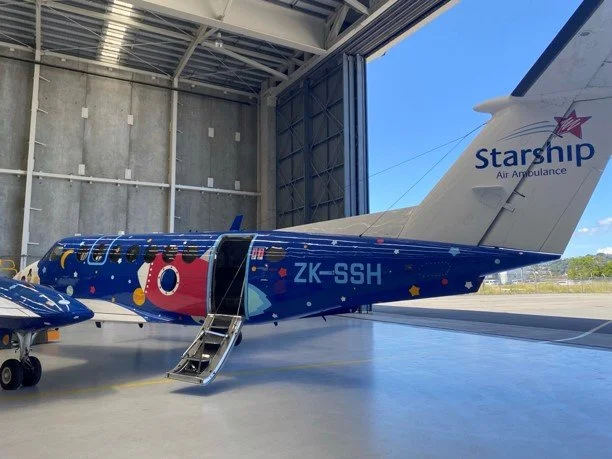
The second half of my time at Starship was spent in the PED, where I enjoyed seeing a real variety of illness and injury presentations in children from a broad variety of ethnicities and socioeconomic backgrounds, ranging from the usual suspects of wheeze, abdo pain and atraumatic limp, to more unusual cases such as typhoid fever.
Something I was really impressed by was the broad multidisciplinary framework that included Maori support workers, Pacific Island support workers, play specialists, phlebotomists and social workers. I was intrigued to see how the phlebotomists would perform almost all the bloods very efficiently using finger prick samples rather than venepuncture. I was also impressed by their community paediatric nurse follow-up service, who were able to support discharges.
The dept had a fantastic teaching ethos, and I benefitted from some of the weekly trainee-led teaching sessions, daily Radiology teaching, as well as consultant-led simulation in Resus.
PEM research was clearly a high priority, with specifically resourced trolleys located in relevant places in the ED containing all the inclusion criteria, protocols and paperwork, as well as any required kit - available right at the point of patient care.
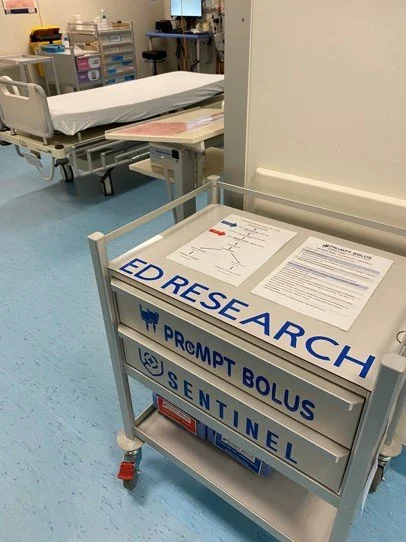
Research Trolley
One of my goals was to learn a bit of paediatric echo. I did get a bit of experience by observing some scans in PICU and then spent a session with one of the sonographers in their clinic, where I got some helpful hands-on practice and tips. I was really impressed by the ‘Heartworks echo sim’ model in their Radiology department - a model on which you can practice cardiac US with live realistic images generated based on probe position, and with ability to programme it show numerous different cardiac pathologies – really helpful for getting comfortable in identifying anomalies.
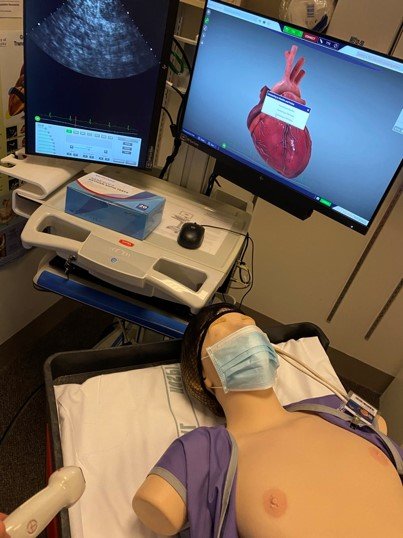
Heartworks echo sim
Sadly, despite the high hopes I had for an NZ summer, weather chaos took hold whilst I was there and Auckland declared a state of emergency with the worst flooding the country had ever seen! Fortunately, although huge amounts of property was damaged, there were no major medical issues affecting children and the hospital did not suffer much damage other than some water ingress in the ED waiting room!
I am enormously grateful to the Medic One Trust for this incredible opportunity to travel and see paediatric EM from a different perspective. It was an honour to learn more about Robin Mitchell himself during the application process and to appreciate his spirit of adventure and learning. He was fondly commemorated amongst the Auckland EM community, having lived and worked there latterly. I would strongly encourage EM trainees to look into the opportunities the fellowship might be able to support them in to develop some aspect of their EM career.