History of Emergency Medicine in Edinburgh
-
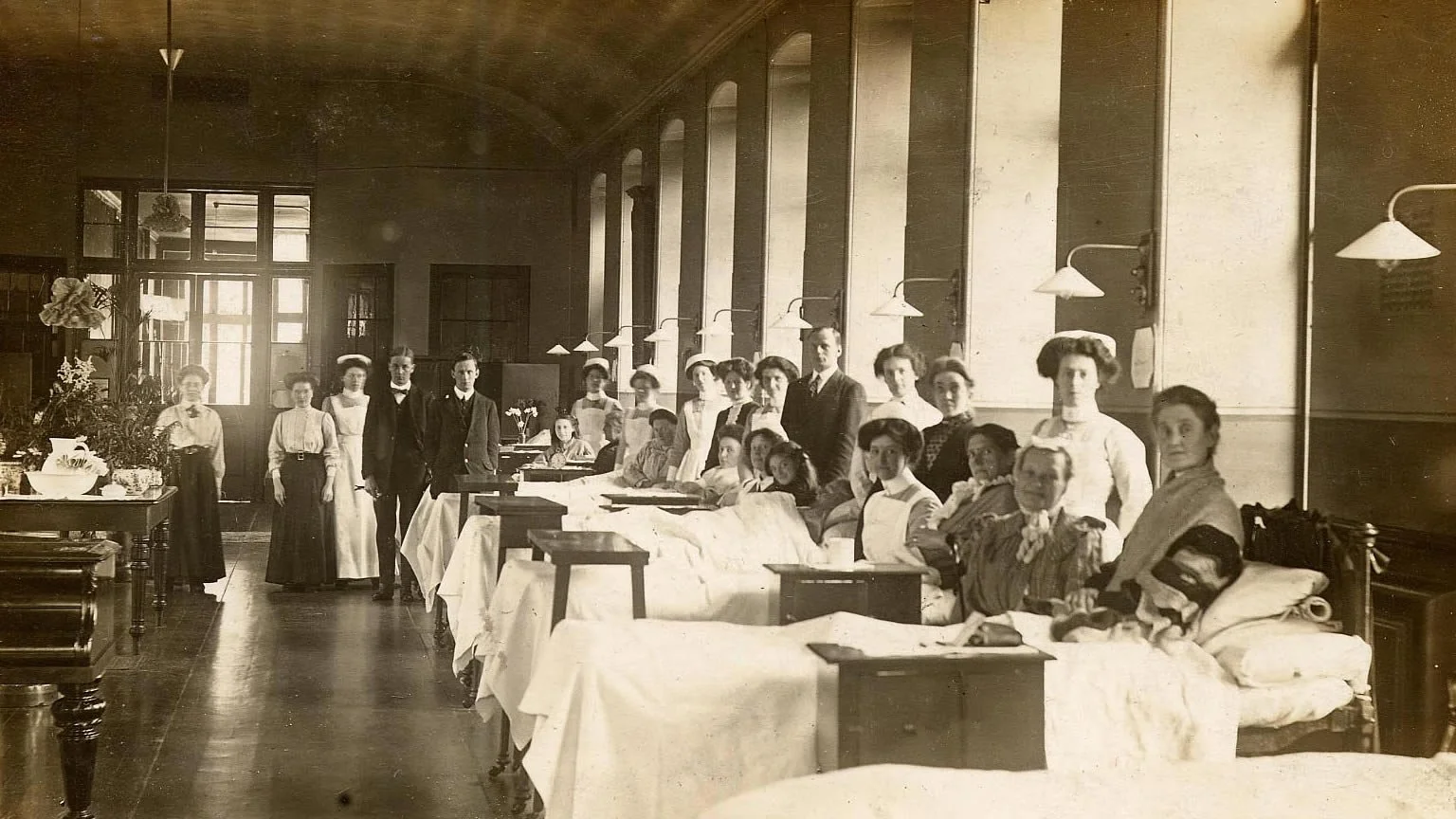
![Typical ward at the former Royal Infirmary, photographed circa 1910. Image courtesy of Lothian Health Services Archive, Edinburgh University Library]()
18th and 19th century
It is difficult to pin down where the first emergency department in Edinburgh was, but in the 18th century with the growing numbers of industrial accidents many hospitals started to develop walk-in ‘casualty rooms’. We know there was a casualty room in Leith from 1788 opened by the ‘Humane Society’ in response to frequent drownings in the port.
Their aim was to rescue casualties and try to resuscitate them, often using conventional (bellows for ventilation) and unconventional methods (tobacco enemas). In 1837 the casualty room was moved from the port to Leith Hospital possibly becoming the first ‘casualty’ department in Edinburgh. Apparently, there was a casualty box on the wall and patients were encourage to donate a ‘sixpence’ to help fund the department (Leith stories)
Photo Credit: Typical ward at the former Royal Infirmary, photographed circa 1910. Image courtesy of Lothian Health Services Archive, Edinburgh University Library
-
![]()
Early 20th Century
In the early 20th century casualty rooms became more common but continued to be staffed by junior staff, often house surgeons, with poor facilities and were thought of as low-status. They mainly dealt with street injuries (trams), burns and industrial accidents, Casualty was where ‘young doctors learned fast — or failed fast.’ There were no ambulances yet so patients were carried in or brought by tram or taxi. There was no triage system and so patients were seen in time order or whoever was the bloodiest or loudest first.
By the 1940s and 50s, with the formation of the NHS, casualty departments were still under staffed and poorly valued although they were becoming busier with frequent road traffic accidents as cars became more common. Many patients died of head or spinal injury or exsanguinating haemorrhage. Interest grew in the treatment of head injuries and ‘traumatic encephalopathy’ (remember there was no CT scan) and the use of whole blood in resuscitation.
-
![]()
1960s and 70s
Due to growing overcrowding in casualty departments in the late 1950’s with limited governance, inconsistent care and poor supervision The Platt Report was commissioned and published in 1962. Platt recommended the creation of ‘accident and emergency departments’ that should be consultant lead. The Accident and Emergency Department in the RIE was established in 1964 with the first consultant Dr Keith Little being appointed in the early 1970’s. Trauma care became increasingly important at this time, Annual Scottish road fatalities peaked at 892 in 1969 reducing steadily to 160 in 2023 (remember seatbelt laws weren’t introduced until 1983). Triage was implemented and patients were assessed based on clinical priority.
An accident and emergency was opened at the Western General Hospital in 1971 and at this time there were still casualty units in both Roodlands Hospital and Bangour Hospital, (although with centralisation of care both the Western and Roodlands units closed by 1990 and West Lothians services were transferred to the new St John’s Hospital in 1989).
-
![]()
1980s and 90s
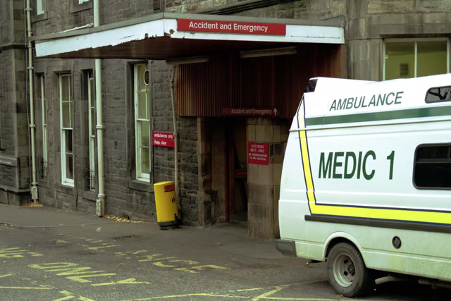
In 1980 Dr Little spearheaded a successful Evening News campaign to raise £10,000 to fund a ‘Medic One’ flying squad that could transport a team of A&E doctors and nurses to the scene of an accident providing immediate care to patients. Medic One became one of the first doctor lead pre-hospital care teams in the UK. The 1986 paper below shows that there were 244 call outs over 6 months, more than one per day. Subsequently, The Medic One Charity was founded to support training and education and is still going strong some 40 years later with the charity having supported many ‘Robin Mitchell’ travelling fellowships.
-
![]()
1980s and 90s
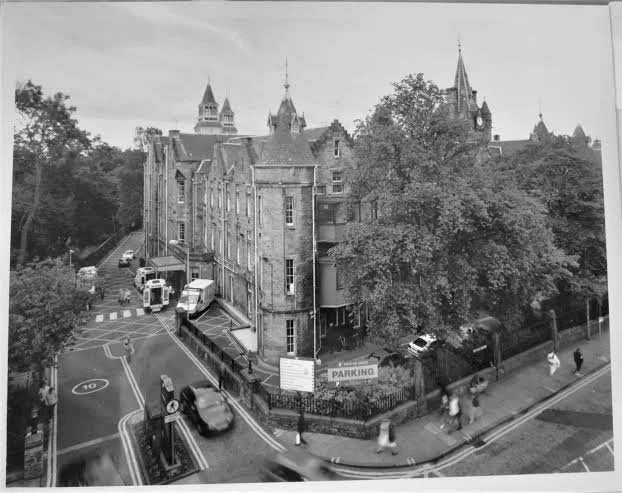
At this time the A&E in RIE was one of the busiest departments in the country seeing upwards of 100,000 patients per year. It was situated just inside the East Pedestrian gate (perfect for walk ins!!) and consisted of a ‘trolleys’ room, ‘high dependency’ with 4 spaces, 2 ‘resus’ rooms and an ‘exams’ area that was separate from the rest of the department. Colin Robertson was appointed as a consultant in 1986 and David Steedman in 1990. Together with Keith Little they provided 24/7 consultant support to the busy department and their teaching and supervision led Edinburgh to become a centre of excellence for training in A&E with many registrars going on to become consultants across the world including Australia, New Zealand and Hong Kong. Maggie White and subsequently Michelle Jamieson were the much respected nurse managers.
At that time most trainees had to complete basic training and postgraduate exams in either medicine or surgery before becoming an A&E trainee but Edinburgh through the Royal College of Surgeons introduced the FRCS A&E in 1983, although the Faculty of Accident and Emergency Medicine was not officially formed until 1993.
-
![]()
1997
As well as providing a pre-hospital care service the department provided a major incident response and supported a number of major incidents, including the Lockerbie air disaster. Hogmanay was always a busy time in the department and the street party in Edinburgh could overwhelm the department. In 1997 the festivities became a near major incident with 350,000 people attending the street party and over 1000 patients presenting to the A&E over 2 days, 38 requiring resus and 8 dying in the department. Fortunately, safety measures were implemented after this including limiting the numbers at the street part, making the event ticketed and having fist aid posts staffed by doctors and nurses throughout the party area.
-
![]()
Early 2000s
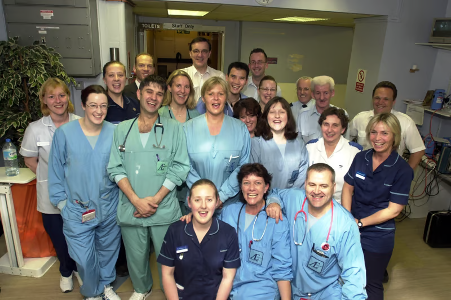
Robin Mitchell and Alasdair Gray were appointed as the ‘young’ consultants in the early 2000’s
In 2003 the A&E services were moved across to the purpose built PFI new RIE site at Little France. This was a major exercise in planning with two teams manning the night shift of the move, one in the old and one in the new site, with a cross over of care at 2am.
Legend has it that the first ‘crash call’ on the new site was a skeleton sent across by the cheeky team above on the old site.